More chargers don't always require more power
How dynamic power distribution could help CPOs increase utilisation without unnecessarily increasing grid capacity
When it comes to EV charging, more power sounds like a good thing. Faster charging, more vehicles served and fewer drivers waiting around. But there's another question worth asking: are charging locations making the most of the power they already have?
Grid capacity remains a challenge for many CPOs. Securing additional power can be expensive, time-consuming and sometimes a significant obstacle to expanding a charging location. Yet having more power available doesn't automatically mean it's being used efficiently.
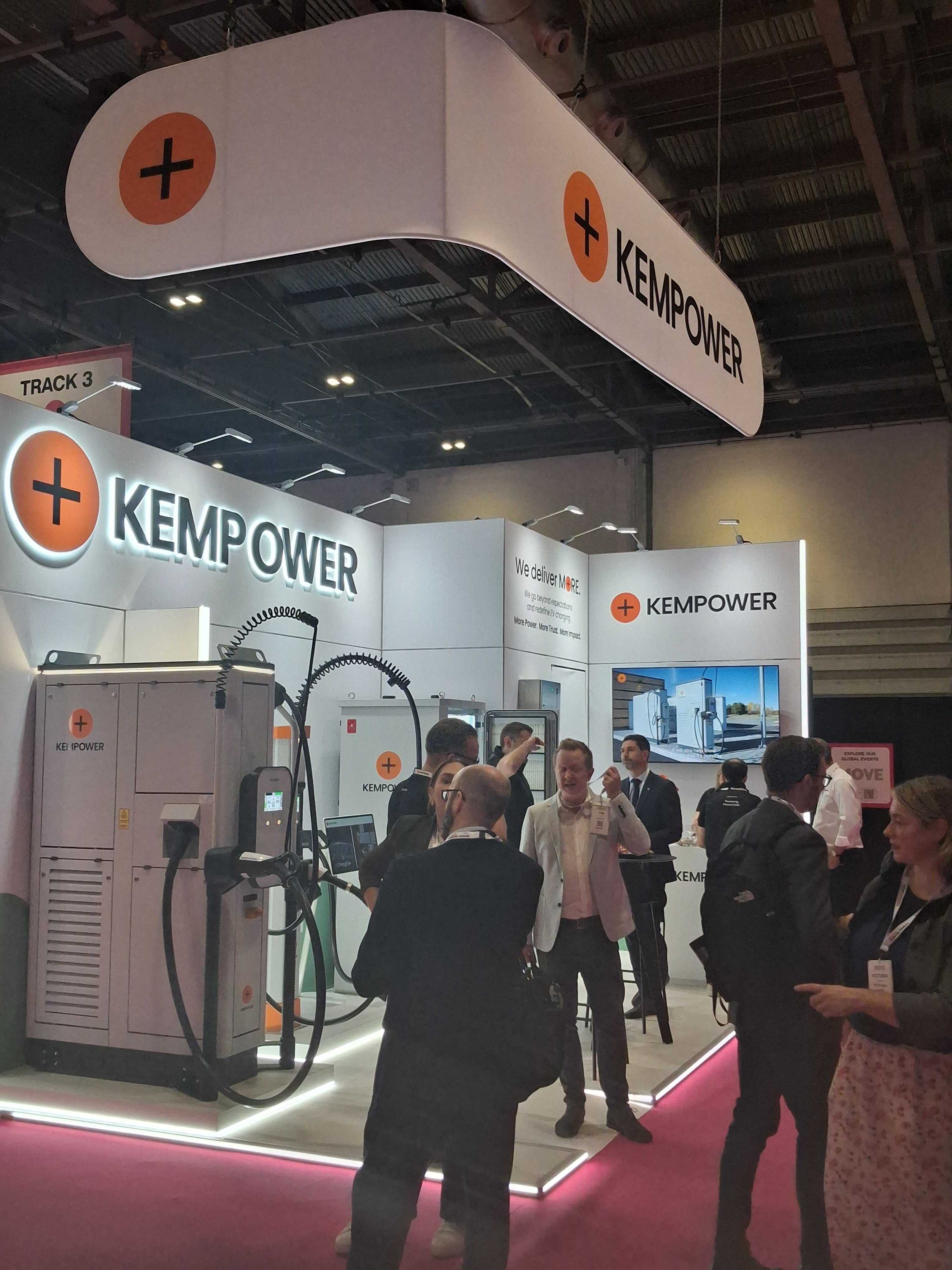
That's something we discussed with Rolle Nieminen from Kempower when we met him at MOVE 2026 in London. The Finnish DC charging manufacturer has developed a smart charging approach that could help operators serve more vehicles by distributing available power more intelligently.
And it starts with understanding what happens when a vehicle plugs in.
The problem with power sitting idle
Not every EV charges at the same speed. Some vehicles can accept 400 kW, others might take 150 kW, and some considerably less. Even a vehicle capable of very high charging speeds won't necessarily draw its maximum power throughout an entire charging session.
This creates an interesting challenge for charging operators. Imagine a charging location with several high-powered chargers, each designed to deliver up to 400 kW. If power is allocated separately to each charger, some of that capacity may go unused while other vehicles could benefit from it.
A vehicle drawing just 75 kW doesn't need 400 kW reserved exclusively for it. And when a vehicle finishes charging, any power that was allocated to it could potentially be put to better use elsewhere.
The challenge isn't necessarily how much power the location has. It's how effectively that power can be shared.
How Kempower approaches the problem
Kempower's distributed charging architecture separates the central power supply from the individual charging connectors. Rather than requiring each charger to have its own dedicated power capacity, a centralised power system dynamically distributes available power between multiple vehicles.
Rolle explained that Kempower's systems can be configured with up to 1.2 MW of power serving as many as 12 connectors. This form of smart charging, known as dynamic power distribution, allows power to be allocated according to what each connected vehicle actually needs, rather than reserving a fixed amount for every charging position.
If one vehicle needs 200 kW, the system can allocate that power, provided sufficient capacity is available. If another only needs 75 kW, it receives what it can use, leaving the remaining available capacity for other vehicles.
As Rolle put it:
"You're not holding any power hostage at a single unit."
It's a great way of explaining the advantage. Instead of leaving available capacity tied to a charger that isn't using it, the system makes that power available elsewhere.
And because a vehicle's charging speed typically changes throughout a session, the distribution of power can change with it. As one vehicle's demand drops or its charging session finishes, capacity becomes available to other connectors.
More charging sessions from the same grid connection?
For CPOs, the commercial implications are interesting. The amount of electricity a charging location can deliver is ultimately constrained by its grid connection and equipment, but smarter distribution can help operators make better use of that capacity.
Rolle gave the example of someone leaving their car charging while doing their weekly shop. Once the vehicle has finished charging, it might remain parked for another half an hour. With a distributed system, the power it was using can immediately be made available to other vehicles, even though the car is still occupying the charging bay.
This becomes particularly valuable when several vehicles are charging simultaneously. Rather than having unused capacity reserved at individual chargers, the system can allocate more of the available power to vehicles that can actually use it.
As Rolle explained, this helps Kempower's CPO customers sell more energy because less available power is unnecessarily held in reserve.
It also creates opportunities for locations where grid capacity is limited or expensive to increase. A smarter distribution system may allow more vehicles to charge from the same connection without requiring a proportional increase in grid capacity.
Of course, there are limits. Dynamic power distribution doesn't create additional electricity, and a location that's already consistently using all its available power may still need a grid upgrade. But where capacity is being underused, better power management could make a meaningful difference.
Could your existing charging locations be working harder?
Smarter power distribution is one way to improve performance. But what if the biggest opportunity at your location is attracting more drivers?
The Nexxt Location Growth Framework helps CPOs identify what's holding individual locations back and activate the right interventions to increase utilisation and revenue.
It's not just about how much power you have
When evaluating a charging location, it's easy to focus on headline figures: the number of connectors, the maximum charging speed and the total installed power. These are important specifications, but they don't necessarily tell you how effectively a location is performing.
A site with impressive charging specifications might still struggle to make the most of its available capacity. Meanwhile, another location with a more modest grid connection could potentially serve a similar number of vehicles through better power management, depending on the demand and mix of vehicles using it.
This raises some useful questions for charging operators. How many vehicles can a location serve throughout the day? How much energy is it actually delivering? And how effectively is it using the capacity that's available?
There's also a distinction between having enough power to serve drivers and having enough drivers to use that power. A charging location might be operating efficiently from a technical perspective but still have plenty of unused commercial potential.
And that's where the conversation becomes bigger than power distribution alone.
Getting more from what you've already built
The EV charging industry has spent years expanding its infrastructure, and that expansion remains essential. But as networks mature, there's also increasing value in understanding how individual locations are performing and what might be preventing them from doing better.
At some locations, the constraint could be available power. At others, it might be reliability, pricing, poor visibility on maps and charging platforms, or simply a lack of local demand.
These are very different challenges, and they require different solutions. A location struggling to serve all the drivers arriving at peak times needs a different approach from one with six perfectly functioning chargers that spend most of the day empty.
That's why improving utilisation isn't always about installing more equipment or launching another marketing campaign. It starts with identifying what's actually holding a particular location back.
Kempower's approach is a good example of how smarter infrastructure can help operators make better use of the power they already have.
But the same principle applies more broadly: before investing in more capacity, more chargers or more locations, it's worth understanding whether the existing assets could be working harder.
Ready to take your CPO marketing to the Nexxt Level?
EV charging is more than just plugging in - it’s about visibility, engagement, and smart monetization. At Nexxt Industry, we help CPOs drive success with cutting-edge marketing strategies that boost utilization and revenue.
Are you ready to bring in an experienced team to work on location growth? Check out our Nexxt location growth framework and managed service.
Learn more
Learn more about us or reach out to learn how working with us will accelerate your marketing results. Stay updated on the latest articles and trends by following us on LinkedIn.