ICNC 2026 showed an industry entering its next phase
As the EV charging market matures, standing out is becoming just as important as scaling up
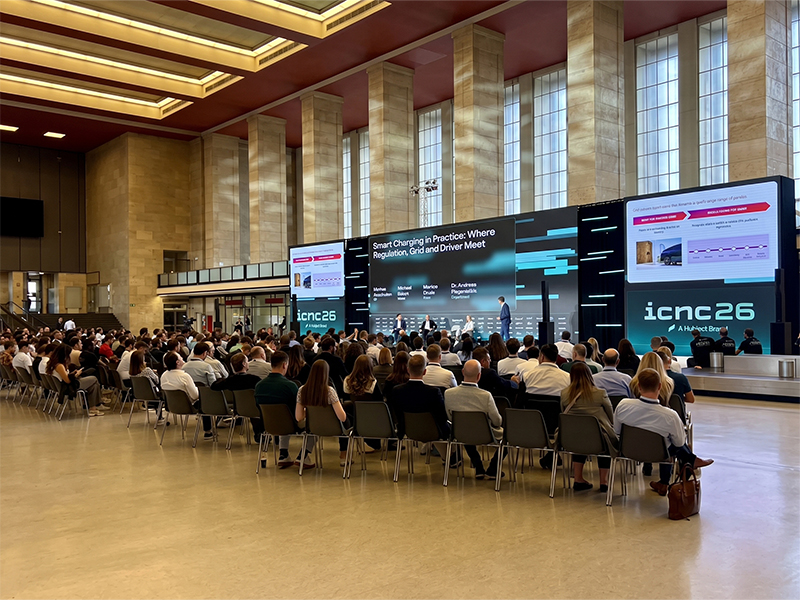
With 9,700 participants, 105 participating partners and five stages of presentations, ICNC 2026 once again brought a huge part of the EV charging industry together at Berlin’s Tempelhof Airport.
Our founder and CEO Theo Reichgelt was there, arriving in style in Berlin aboard the fully electric TandemDrive Express and spending the event speaking with companies from across the charging industry.
He came back with plenty of conversations to follow up on, but also with a clear impression of where the market is heading. The EV charging industry is maturing. The land-grab mentality that defined much of its early growth is giving way to harder questions about commercial performance, profitability and long-term viability. And as that happens, the ability to clearly differentiate your company is becoming much more important.

A lot of software. Not a lot of differentiation.
One thing stood out walking around ICNC: charging software was everywhere. CPMS providers and other software platforms occupied a significant part of the exhibition, all competing for attention from CPOs and other potential customers.
But there was a problem.
It was often surprisingly difficult to understand what made one platform meaningfully different from the next. Many were talking about similar functionality, similar features and, increasingly, similar applications of AI. There is clearly plenty of technological capability in this market. What was less clear was why a buyer should choose one particular company over another.
In a market entering a more mature phase, that's a dangerous position to be in. When companies appear interchangeable, buyers need other ways to compare them. Features, specifications and price become more important, differentiation becomes increasingly difficult and, ultimately, there probably isn't room for every platform currently competing in this market to succeed.
But that also creates an opportunity. Where so many companies are telling similar stories, the companies that establish a distinctive position now have a real chance to stand out.
Get big, get niche, or get out.
Consolidation was another major theme coming out of ICNC. In his keynote, AMPECO CEO and co-founder Orlin Radev summed up the strategic choices facing Europe's charge point operators particularly well: get big, get niche, or get out.
The land grab is coming to an end and networks are already changing hands, with the expectation that more consolidation will follow, including across borders. Getting big requires financial strength, and scale alone isn't enough if the underlying business or network isn't performing. Getting niche means becoming exceptionally relevant within a particular geography, segment or use case. And some businesses that can achieve neither are unlikely to survive in their current form.
That discussion was particularly focused on CPOs, but we think the underlying lesson applies more widely. As markets mature, being one of many companies offering roughly the same thing becomes increasingly difficult to sustain.
For CPMS and charging software companies, that creates an important question:
What do you want to be known for?
The strongest technology doesn't automatically build the strongest position
For years, companies across eMobility could differentiate themselves simply by having new technology, expanding quickly or being early to market. That's becoming harder. As capabilities converge and competitors become more sophisticated, differentiation has to extend beyond the product itself.
That's where Market Authority becomes increasingly important.
Most companies already have expertise inside their organisation that could set them apart: years of customer experience, a particular view of where the industry is going, specialist knowledge of certain challenges and evidence of problems they've successfully solved. But having that expertise isn't the same as being known for it.
The companies that systematically bring their expertise into the market can begin to build a position around it. Over time, potential customers start associating that company with particular problems, ideas and capabilities. When a CPO eventually goes looking for a new CPMS or another software solution, those companies aren't starting from zero. They're already recognised, they're already credible and, crucially, they're already being considered.
In a crowded market, that matters.
The market is moving from growth to performance
This shift wasn't limited to software. Another of Theo's big takeaways from ICNC was how the conversation among CPOs is changing.
In previous years, much of the focus was on expansion: securing locations, building infrastructure and growing networks as quickly as possible. This year, there was noticeably more discussion about what happens next. How do you increase utilisation? How do you improve underperforming locations? How do you commercialise the network you've spent years building?
Investors are also increasingly interested in track record and cash flow rather than simply the promise of the technology or the size of the opportunity. It's another indication that eMobility is moving into a different stage of its development. Building something is no longer enough. It increasingly has to perform.
And the same applies to market position.
Standing out at ICNC
There was also a very visible example at ICNC of what can happen when a company gives the market something distinctive to engage with.
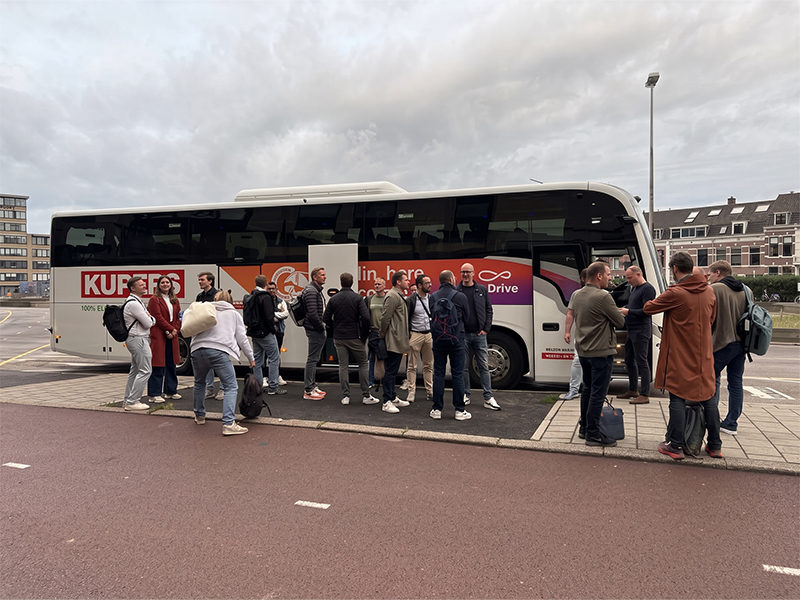
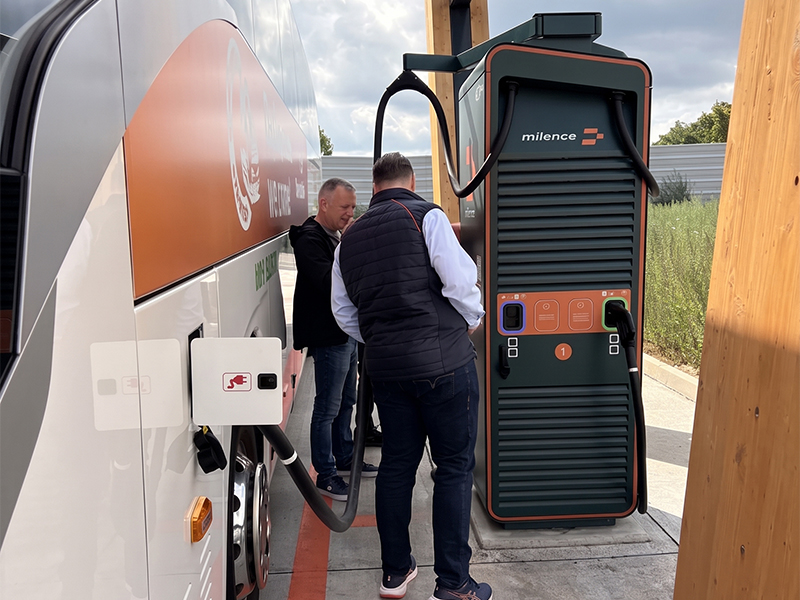
We've been working with TandemDrive to help build its authority around the operational and financial side of EV charging. For ICNC, TandemDrive created the TandemDrive Express, a fully electric coach carrying a group of EV charging professionals from the Netherlands to Berlin (with a charging stop at Milence Barsinghausen along the way). The journey generated plenty of attention before the event, and once in Berlin, the bus was parked prominently in the Tech Village at Tempelhof.
For a company that has traditionally operated somewhat under the radar, the difference was noticeable. In our post-event conversation, the TandemDrive team described the Express as the “talk of the town” at ICNC.
And that's an important part of building Market Authority. TandemDrive's expertise hadn't suddenly changed. What had changed was the market's awareness of the company and what it stands for. It gave people a reason to notice, talk about and remember TandemDrive.
That's how recognition starts to build.
What we took from ICNC 2026
ICNC showed an industry with plenty of innovation still ahead of it, but also one becoming more commercially demanding. There are more companies, more sophisticated products and more competition. Consolidation is underway. CPOs are paying closer attention to utilisation and commercial performance. And investors increasingly want evidence of sustainable businesses rather than growth stories alone.
For charging software companies in particular, we think that makes differentiation one of the biggest questions to solve next. When a market is crowded with capable companies offering similar solutions, having good technology is the price of entry. The companies that succeed will also need to give customers a reason to recognise them, trust them and ultimately choose them.
Get big. Get niche. Get out.
Whichever route a company takes, being known for something is going to matter.
Build your Market Authority
As the eMobility market matures, strong technology alone won't always be enough to stand out. Companies also need a clear position in the market and a reason for potential customers to recognise, trust and consider them.
At Nexxt Industry, we help B2B tech companies turn the expertise already inside their organisation into a strong, visible authority position in their market.
Want to see how your brand performs today? Take the Market Authority Index test and discover your score.
For more industry insights and conversations, listen to our podcast and follow Nexxt Industry on LinkedIn to stay up to date with new articles, market trends, and eMobility news.