EV charging's next challenge isn't expansion. It's reliability.

How EVAILABLE is helping charging networks focus on reliability, not just expansion
For years, one of the biggest challenges facing the EV charging industry was obvious: we needed more chargers. More locations, more coverage and more capacity were essential to support a rapidly growing number of electric vehicles.
And while the rollout is far from finished, the conversation is beginning to change.
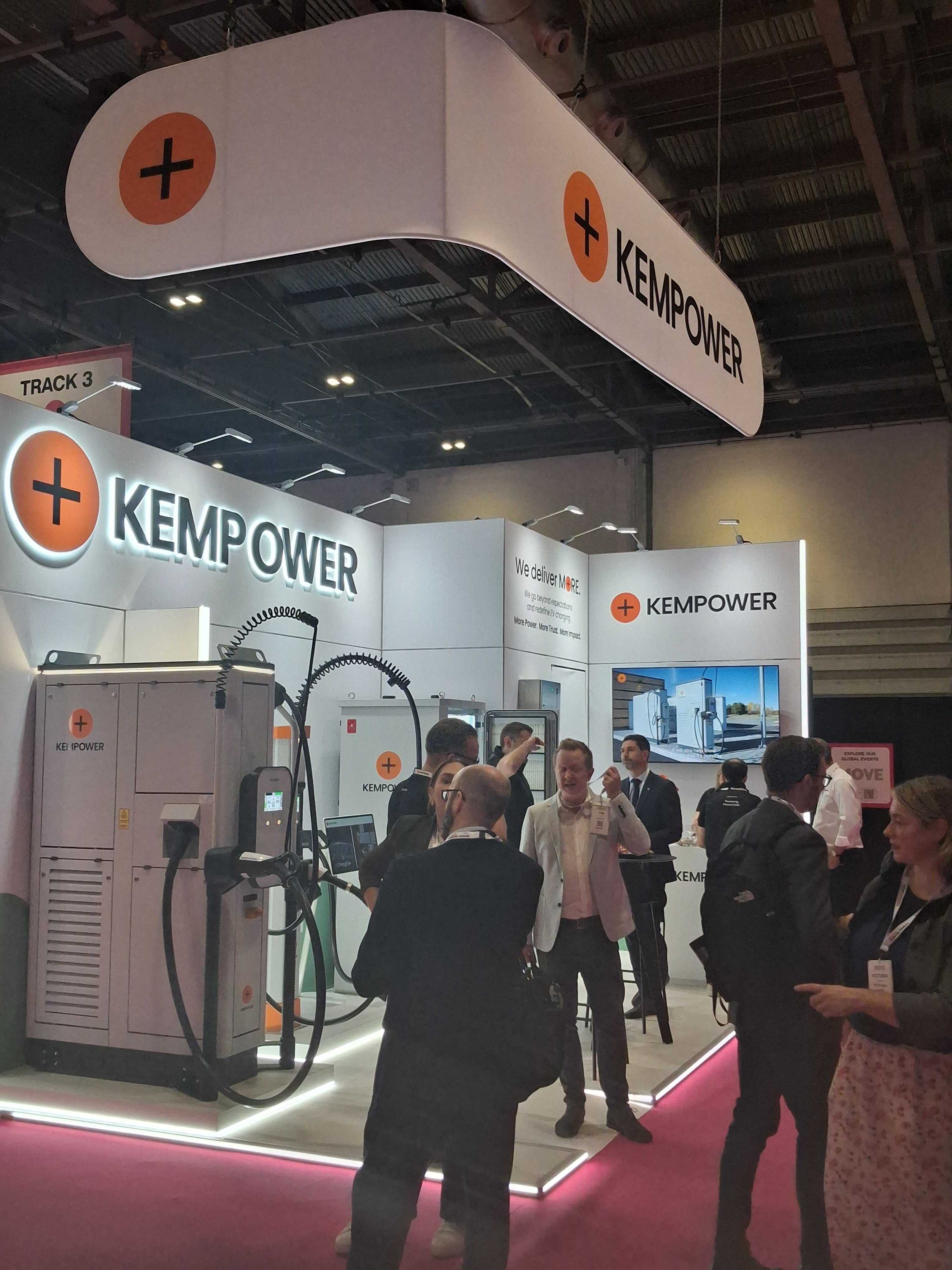
At MOVE 2026 in London, I spoke with Maren Rehnelt and Stefan Reins from EVAILABLE, a company specialising in predictive maintenance for EV charging networks. Our conversation touched on something we're hearing increasingly across the industry. For many charge point operators, the challenge is no longer simply how quickly they can grow their network. It's how they can make the infrastructure they've already built work better.
That means higher utilisation, fewer failed charging sessions and, crucially, greater reliability.
From reactive to proactive
Traditionally, identifying problems across a charging network can be surprisingly reactive. Something goes wrong with a charger, a driver encounters the problem and calls the operator, a support ticket is raised, somebody investigates and the issue can finally be addressed. By that point, however, several other drivers may already have experienced the same problem.
That's exactly the cycle EVAILABLE is trying to break.
The company's software analyses data generated by charging networks to identify faults, automate monitoring and spot patterns that could indicate something is likely to go wrong.
As Maren explained when we met at MOVE:
"We try to avoid issues before anyone ever knows they exist."
Instead of waiting for a charger to fail and then reacting, operators can use the data their infrastructure is already generating to identify potential problems earlier. It's a shift from reactive maintenance towards predictive maintenance, where the aim is to intervene before the problem reaches the driver.
Online doesn't always mean available
This also raises an important question about how charging network performance is measured. A charger can be connected and communicating with the network without necessarily providing the experience a driver expects when they arrive.
That's why EVAILABLE focuses on what it calls "real availability": looking beyond whether infrastructure is technically online towards whether it's actually capable of delivering a successful charging experience.
Its software analyses existing charging network data to identify signals and patterns that help operators understand what's really happening across their infrastructure. Support information can become part of that picture too.
Maren explained that EVAILABLE can integrate information from ticketing systems. If a driver reports that a station says it's online but they can't actually charge, that information can be associated with the relevant charge point alongside the technical data. Instead of operations teams jumping between different systems and trying to piece everything together themselves, the software can help connect the dots.
For increasingly large charging networks, that's an important capability.
One bad experience can cost more than one charging session
One of the most interesting parts of our conversation wasn't actually about algorithms. It was about Stefan's own behaviour as an EV driver.
He told me that when travelling, he effectively has his own list of charging operators he prefers to use and others he avoids. Reliability plays a big part in deciding which list an operator ends up on.
"I try once, that's fine. I give it a second chance. If it fails, then it's off the list."
For Stefan, other factors matter too. Location, charging speed and the overall experience all influence where he chooses to stop, while facilities become particularly important when travelling with children. But none of those things count for much if the charger doesn't work.
And that has an important commercial implication. A failed charging session doesn't necessarily cost a CPO one transaction. It can affect whether that customer chooses the network the next time they need to charge, and the time after that.
Reliability isn't simply an operational KPI. It's part of the brand experience.
From network growth to network utilisation
The early stages of charging infrastructure development understandably placed enormous emphasis on expansion. Operators needed locations and they needed chargers in the ground. But installing infrastructure is only the beginning of its commercial life.
Once it's there, operators need people to use it.
A charger experiencing unnecessary downtime isn't simply an inconvenience; it's an asset that isn't generating revenue. And if repeated poor experiences cause drivers to prefer competing networks, reliability starts to have a direct relationship with future utilisation too.
This is why the conversation across the industry is increasingly moving beyond the size of a network towards how effectively that network is operated. Expansion still matters, but so do utilisation, uptime, operational efficiency and the experience delivered by every charger already in the ground.
The technology drivers never see
Interestingly, EVAILABLE likes to stay behind the scenes.
The company doesn't communicate directly with EV drivers. It's a B2B technology provider working with the organisations responsible for operating charging infrastructure. And Maren was perfectly happy with that.
"The drivers don't know that we exist, and we're happy that way."
There's something quite revealing about that statement. Drivers shouldn't need to understand the software monitoring a charger. They shouldn't need to know about algorithms, error messages, support systems or predictive maintenance. They should simply be able to arrive, plug in and charge.
In fact, if companies like EVAILABLE are doing their jobs successfully, the driver may never know they were involved at all.
The next phase of EV charging
We still need more charging infrastructure. As EV adoption grows, networks will continue to expand and new locations will continue to be built. But scale alone won't define the next stage of the market.
The infrastructure that's already been deployed needs to become more reliable, more highly utilised and easier to operate. That could make technologies such as predictive maintenance increasingly important, particularly as networks become too large and complex to monitor effectively through traditional reactive approaches.
Our conversation with Maren and Stefan at MOVE 2026 was a good reminder that some of the most interesting innovation in EV charging isn't necessarily happening at the charger itself. It's happening quietly behind it.
Because as the industry matures, the winners won't necessarily be the networks that simply build the most. They'll be the ones drivers can rely on.
Ready to take your CPO marketing to the Nexxt Level?
EV charging is more than just plugging in - it’s about visibility, engagement, and smart monetization. At Nexxt Industry, we help CPOs drive success with cutting-edge marketing strategies that boost utilization and revenue.
At Nexxt Industry, we offer eMobility marketing services with a decade of industry experience, including expertise in marketing for companies who work in the charging infrastructure sector. With us, you instantly add years of eMobility marketing experience to your eMobility marketing team.
If you would like to learn more about the strategies mentioned in this article and discover how they can help boost your business, download our free eBook: Advanced marketing strategies for Charge Point Operators.
Are you ready to bring in an experienced team to work on location growth? Check out our Nexxt location growth framework and managed service.
Learn more
Learn more about us or reach out to learn how working with us will accelerate your marketing results. Stay updated on the latest articles and trends by following us on LinkedIn.